FAQs: What Are the Best Shoes for People With Parkinson’s Disease?
Living with Parkinson’s disease often means dealing with changes in balance, gait, muscle stiffness, and coordination. Footwear plays a surprisingly important role in daily safety and comfort. The right pair of shoes can reduce fall risk, ease fatigue, and improve confidence when walking—both indoors and outdoors.
Below, we answer the most common questions about choosing the best shoes for people with Parkinson’s disease.
Why Is Shoe Choice So Important for People With Parkinson’s Disease?
Parkinson’s disease can affect posture, step length, and reaction time. As symptoms progress, even everyday walking can feel uncertain.
Choosing appropriate shoes can significantly improve comfort, safety, and mobility for people living with Parkinson’s disease. Well-designed footwear supports controlled movement, minimizes slipping, and reduces unnecessary strain on joints and muscles during daily activities.
What Features Should Parkinson’s-Friendly Shoes Have?
1. Stability Comes First
The best shoes for people with Parkinson's disease prioritize stability to reduce the risk of falls. Look for shoes with a solid base, a firm structure, and components that help keep the foot securely aligned with each step.
Key stability features include:
- A firm heel counter
- A heel-hugging cup
- A supportive midsole that doesn’t collapse under pressure
2. Slip-Resistant Outsoles
Balance challenges make traction essential.
Slip-resistant outsoles provide better traction and safety during walking, especially on smooth floors, sidewalks, or slightly uneven outdoor paths.
Rubber outsoles with reliable grip patterns are ideal for daily wear and light outdoor use.
3. Easy On and Off Design
Tremors, rigidity, and reduced dexterity can make traditional laces frustrating.
Shoes with wide openings and easy closures make it easier to put on and take off footwear. Slip-on designs with elastic gores or stretch panels reduce daily effort while still providing a secure fit.
4. Firm Heel Counters for Balance
Firm heel counters help maintain balance and support controlled movement. A stable heel prevents excessive wobbling and supports smoother heel-to-toe transitions, which is especially helpful for shuffling gait patterns.
5. Lightweight Construction
Heavy shoes increase fatigue and make walking feel more difficult.
Lightweight shoes reduce effort and improve walking confidence, allowing for more natural movement without unnecessary drag.
6. Cushioning and Shock Absorption
Joint discomfort is common, especially with prolonged walking or standing.
Cushioned midsoles absorb shock and reduce joint strain during daily activities. EVA midsoles are particularly effective because they offer support without excessive stiffness.
7. Supportive Footbeds
Supportive footbeds promote proper alignment and reduce fatigue. A well-designed insole helps stabilize the foot, supports the arch, and encourages a more efficient walking pattern.
Are Wide or Extra-Wide Shoes Better for Parkinson’s Patients?
Often, yes. Parkinson’s can be accompanied by swelling, high insteps, bunions, hammer toes, or arthritis.
Shoes with:
- A wide toe box
- Extra depth
- Wide (2E) or extra-wide (4E) options
help reduce pressure points and improve overall comfort, especially for all-day wear.
Recommended Option: FitVille Men’s Explorer Slip-On V2
The FitVille Men’s Explorer Slip-On V2 checks many of the boxes that matter most for people with Parkinson’s disease.
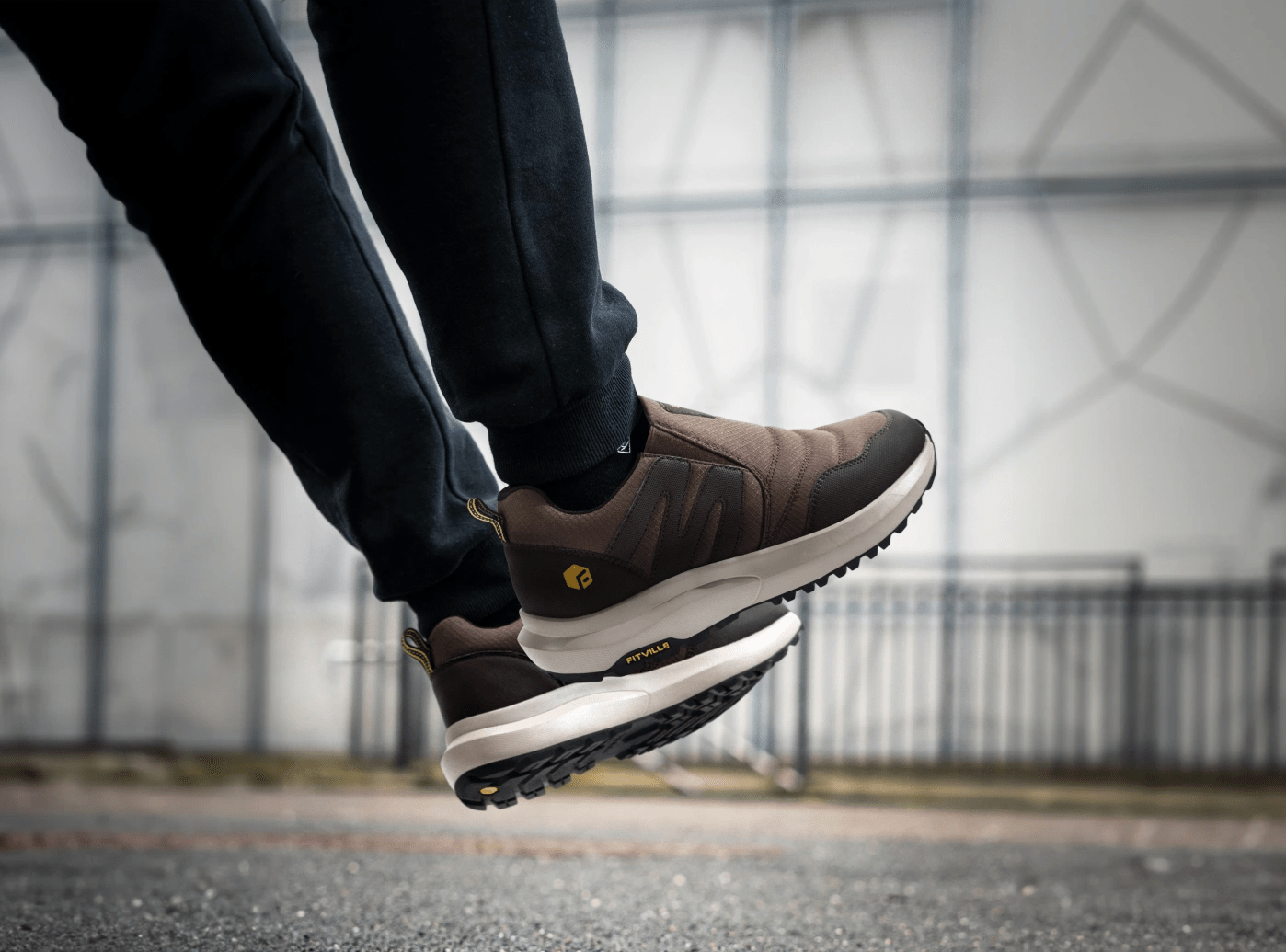
Why It Works Well
- Easy slip-on & off: Elastic double gore allows wearers to glide into a secure, sock-like fit—ideal for reduced hand dexterity.
- Stable and supportive: A firm heel counter, heel-hugging cup, and padded collar work together to enhance balance and gait control.
- Slip-resistant rubber outsole: Provides reliable traction for urban walking and light outdoor paths.
- Cushioned EVA midsole: Delivers shock absorption and day-long comfort, helping reduce joint strain.
- Supportive insole: High-density rebound insoles promote proper alignment and reduce fatigue.
- Wide & extra-wide fit: Available in Wide (2E) and Extra Wide (4E), with extra depth for high insteps, swollen feet, bunions, arthritis, and hammer toes.
- Zero break-in time: Silky lining and cushioned collar ensure immediate comfort from the first wear.
Construction Overview
- Upper: Synthetic leather and nylon mesh for breathability and durability
- Midsole: Advanced EVA for supportive cushioning
- Outsole: Rigid rubber for dependable grip
- Weight: Approx. 413 g per shoe (UK size 9)
Designed with American ingenuity and manufactured with trusted Asian partners, this model balances structure, comfort, and ease of use—making it suitable for everyday walking, errands, and light exploring.
Final Thoughts
For people with Parkinson’s disease, footwear is more than a comfort choice—it’s a safety tool. Shoes that emphasize stability, traction, easy entry, and supportive cushioning can make daily movement feel safer and more manageable.
By focusing on thoughtful design and practical features, the right pair of shoes can help restore confidence, reduce fatigue, and support more independent mobility—one step at a time.